

How Much House Can I Afford in Katy, Texas?
Updated: September 2026
By Ivy Morales, NMLS #2084219 | The Mortgage Ivy empowered by NEXA Lending LLC.
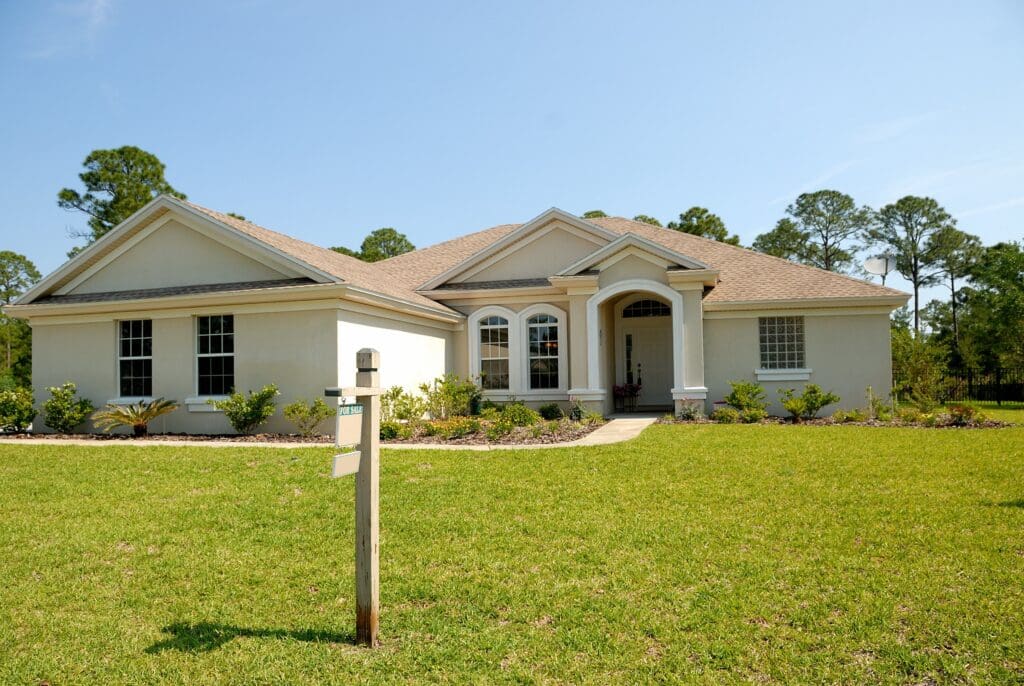
If you are thinking about buying a home in Katy, Texas, you may be asking:
“I make $80,000 a year. How much house can I afford?”
It sounds like a question that should have a simple answer.
But your income alone does not determine your homebuying budget.
Two people can earn exactly the same salary and still have very different buying power because a mortgage review also considers their debts, credit profile, down payment, loan program, interest rate, and the expenses associated with the property they want to buy.
And there is another number that matters just as much:
How much are you comfortable paying every month?
Let’s break down how the numbers actually work.
Quick Answer
There is no single home price that everyone earning $80,000—or any other income—can afford.
Your potential homebuying range depends on the complete financial picture, including:
❧ Qualifying income
❧ Monthly debt obligations
❧ Credit profile
❧ Down payment
❧ Loan program
❧ Interest rate
❧ Property taxes
❧ Homeowners insurance
❧ Mortgage insurance, when applicable
❧ HOA dues, when applicable
❧ Other applicable property expenses
❧ Applicable underwriting requirements
This is why I do not like answering:
“You make $80,000, so you can afford a $___ house.”
Without reviewing the rest of the numbers, that answer could be misleading.
Step 1: Start With Qualifying Monthly Income
Let’s use $80,000 per year simply as an example.
$80,000 divided by 12 equals approximately:
$6,666.67 in gross monthly income.
That gives us a starting point.
But it does not tell us the home price yet.
There is also an important distinction between the amount someone earns and the amount of income that can be used to qualify for a particular mortgage.
Income generally must meet applicable documentation and underwriting requirements. How income is calculated may also differ depending on the source of the income and loan program.
So the next question is not simply how much you earn.
It is:
What qualifying income can be used, and what monthly obligations does the borrower already have?
Step 2: Your Monthly Debts Affect Your Buying Power
Imagine two buyers.
Both earn $80,000 per year.
Buyer A
Has:
❧ $650 car payment
❧ $300 student loan obligation
❧ $200 in credit card minimum payments
Buyer B
Has:
❧ $250 car payment
❧ No student loan payment
❧ $50 in credit card minimum payments
They have the same income.
But they do not necessarily have the same mortgage buying power.
Why?
Because mortgage qualification considers qualifying monthly debt obligations in relation to gross monthly income.
This is commonly referred to as the debt-to-income ratio, or DTI.
A simplified way to understand it is:
Monthly qualifying debt obligations ÷ gross monthly income = debt-to-income ratio
There is not one universal maximum DTI that applies to every borrower. Requirements can vary based on the mortgage program, lender or investor requirements, automated underwriting findings, compensating factors, and the overall loan file.
This is one reason income alone cannot tell you how much house you can afford.
Step 3: Know the Difference Between Your Qualification Number and Your Comfort Number
This may be the most important part of the entire affordability conversation.
There are really two numbers to consider.
Number 1: Your Qualification Number
This is based on the applicable mortgage program, qualifying income, debts, credit profile, assets, property, loan structure, and underwriting requirements.
Number 2: Your Comfort Number
This is the amount you feel comfortable spending on housing each month.
Those numbers do not have to be the same.
Your personal budget may also need room for:
❧ Groceries
❧ Utilities
❧ Transportation
❧ Childcare
❧ Emergency savings
❧ Retirement contributions
❧ Travel
❧ Education
❧ Debt reduction
❧ Home maintenance and repairs
❧ Other financial priorities
Being approved for a particular mortgage amount does not mean you are required to spend that much.
The goal should not simply be to find the highest price you may qualify for.
The goal is to understand what purchase range works with your mortgage profile and your personal budget.
Step 4: Look at the Total Housing Expense — Not Just Principal and Interest
One of the biggest mistakes buyers can make is looking only at principal and interest.
Depending on the property and financing, your overall housing expense may include:
❧ Principal
❧ Interest
❧ Property taxes
❧ Homeowners insurance
❧ Mortgage insurance, when applicable
❧ HOA dues, when applicable
❧ Flood or other property-specific insurance, when applicable
Property taxes and homeowners insurance are commonly collected through an escrow account and included in the payment made to the mortgage servicer, depending on the loan structure.
HOA dues, however, are generally paid separately to the homeowners association.
Even when an expense is paid separately, it can still matter when evaluating affordability and mortgage qualification.
The listing price is only one number.
The complete housing expense tells you much more.
Step 5: In Katy, the Specific Property Can Change the Answer
This is particularly important when shopping in Katy, Texas.
Two homes can have the same $350,000 sales price and still have different monthly housing expenses.
For example:
Home A — $350,000
May have:
❧ One property-tax profile
❧ One homeowners insurance estimate
❧ One HOA amount
Home B — $350,000
May have:
❧ A different property-tax profile
❧ A different homeowners insurance estimate
❧ A different HOA amount
The sales price is identical.
The total housing expense may not be.
That difference can affect both your personal budget and mortgage qualification.
This is why I encourage buyers to evaluate the specific property, rather than assuming every home at the same price will produce the same payment.
Step 6: Your Interest Rate Changes the Equation
Your interest rate directly affects the principal-and-interest portion of your mortgage payment.
That means the same borrower looking at the same home price could have a different estimated payment if the interest-rate assumption changes.
Mortgage rates are also not universal.
The rate and pricing available to a borrower may depend on factors including:
❧ Loan program
❧ Credit profile
❧ Down payment
❧ Property type
❧ Occupancy
❧ Loan amount
❧ Market conditions
❧ Lock timing
❧ Other applicable pricing factors
Rates can change before they are locked.
For that reason, an affordability calculation is an estimate based on the information and assumptions available at that time—not a permanent number.
Step 7: Your Down Payment Also Affects Affordability
Your down payment affects how much you need to borrow.
Two buyers purchasing the same property could therefore have different loan amounts and monthly payments because they are making different down payments.
Depending on the mortgage program and transaction, the down payment can also affect:
❧ Mortgage insurance
❧ Loan pricing
❧ Available loan options
❧ Required funds
❧ Overall loan structure
And no—you do not necessarily need 20% down to purchase a home.
The appropriate down payment depends on the loan program, borrower eligibility, property, and overall transaction.
But that leads to a different question:
“If I know approximately how much house I can afford, how much money do I actually need to buy it?”
That is a separate calculation.
I answer that question in:
How Much Money Do I Need to Buy a House in Katy, Texas?
So, If I Make $80,000, How Much House Can I Afford?
The responsible answer is:
We need more information.
Your $80,000 income gives us a starting point.
To estimate a meaningful homebuying range, a mortgage review should also consider:
❧ How your income qualifies
❧ Your monthly debt obligations
❧ Your credit profile
❧ Your available down payment
❧ Your comfortable monthly housing budget
❧ Potential mortgage programs
❧ The interest rate being used for the estimate
❧ Estimated property taxes
❧ Estimated homeowners insurance
❧ Mortgage insurance, if applicable
❧ HOA dues, if applicable
❧ Other applicable housing expenses
Once those pieces are put together, we can begin translating the financial profile into a more meaningful estimated purchase-price range.
A Better Question to Ask Your Mortgage Loan Officer
Instead of asking only:
“What is the maximum house I can qualify for?”
Consider asking:
“What purchase range gives me a housing payment I can realistically manage?”
Then ask to see different scenarios.
For example:
What happens at $300,000?
What happens at $325,000?
What happens at $350,000?
What happens if the property taxes are higher?
What happens if the HOA is $150 per month?
What happens if I increase or decrease my down payment?
What happens if the interest rate changes?
Looking at multiple scenarios can help you understand the tradeoffs rather than focusing on a single maximum approval amount.
The Mortgage Ivy’s Local Buyer Tip
When you find a home you like in Katy, ask your mortgage professional to update the estimated numbers for that specific property before you make an offer.
Do not assume:
“I was pre-approved up to $350,000, so every $350,000 house works.”
The property matters.
The taxes matter.
The insurance matters.
HOA dues can matter.
The interest rate matters.
Your financing structure matters.
And most importantly:
Your budget matters.
Pre-Approval Gives You a Starting Point — Not a Spending Goal
A thoughtful mortgage pre-approval should help you understand more than whether you may qualify for financing.
It should help answer:
What purchase range should I be considering?
What might my total housing expense look like?
How could different properties change that amount?
Which financing options should I compare?
What amount feels comfortable for me?
That gives you something much more useful than a maximum number.
It gives you a strategy before you start shopping.
Your Next Question: How Much Money Do I Need?
Once you understand your potential homebuying range, the next question is usually:
“Okay, but how much money do I actually need to buy the house?”
That is a different calculation.
Your upfront funds may involve your down payment, closing costs, prepaid expenses, initial escrow funding, and other transaction-specific amounts.
Read:
How Much Money Do I Need to Buy a House in Katy, Texas?
Together, these two questions give you a much clearer starting point:
1. How much house can I reasonably afford?
2. How much money may I need to complete the purchase?
Related Mortgage Insights
Add these links once the pages are published:
❧ Can I Buy My First Home in Katy, Texas With Down Payment Assistance in 2026?
❧ What Credit Score Do I Need to Buy a Home in Katy, Texas in 2026?
❧ How Much Money Do I Need to Buy a House in Katy, Texas?
❧ Should I Get Pre-Approved Before Looking at Homes in Katy, Texas?
❧ Can I Buy a Home in Katy, Texas If Another Lender Denied Me?
Work With The Mortgage Ivy
I’m Ivy Morales, NMLS #2084219, the mortgage strategist behind The Mortgage Ivy Empowered by NEXA Lending LLC.
I created Mortgage Insights with The Mortgage Ivy to answer the home-financing questions buyers, homeowners, and real estate investors frequently ask.
I help first-time buyers, homeowners, investors, FHA buyers, VA buyers, self-employed buyers, and Spanish-speaking buyers understand mortgage options with clarity.
If you are thinking about buying a home in Katy, Texas, start with the numbers before you shop.
Before you fall in love with a home, let’s calculate the estimated payment, cash to close, and possible loan options first.
Ivy Morales, NMLS #2084219
Mortgage Loan Officer | NEXA Lending
The Mortgage Ivy Empowered by NEXA Lending LLC.
Bilingual Mortgage Guidance in English & Spanish
Website: www.themortgageivy.com YouTube: @themortgageivy
Call/Text: 281-305-8822 | 713-542-5976
Apply or Schedule: Mortgage Intake Form, Formulario de Preparacion, or Schedule a meeting.
Prefer to Watch Instead of Read?
Visit my YouTube channel, The Mortgage Ivy, for short, easy-to-understand videos answering common questions about mortgages, homebuying, credit, financing options, and the home loan process.
▶ Watch The Mortgage Ivy on YouTube: YouTube@themortgageivy
Suggested website CTA button:
Find My Comfortable Homebuying Budget
Important Disclaimer
This information is for educational purposes only and is not a commitment to lend or a guarantee of qualification. Mortgage program availability, rates, terms, credit requirements, income requirements, debt-to-income guidelines, down payment assistance options, seller credits, and required funds may change and vary by borrower, property, loan program, lender, and transaction details. Final approval is subject to underwriting review, investor guidelines, property eligibility, appraisal review, title review, documentation requirements, and all applicable loan program rules. Rates and program guidelines are subject to change. This content is not legal, tax, credit repair, financial, or real estate contract advice.